





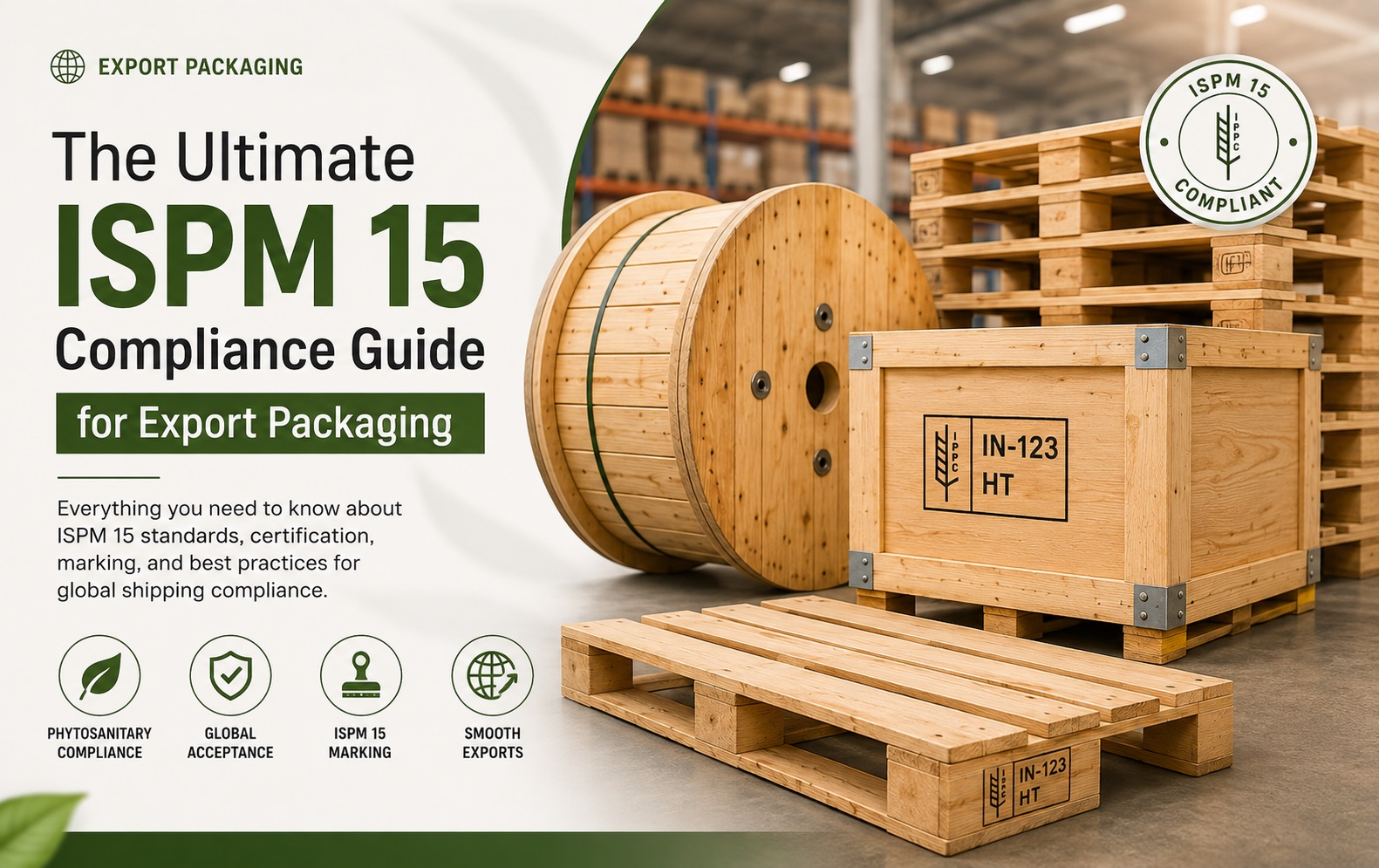
The Ultimate ISPM 15 Compliance Guide for Export Packaging
If your business ships products internationally using solid wood pallets, crates, or boxes, ISPM 15 (International Standards for Phytosanitary Measures No. 15) is one of the most critical regulations you must navigate. A single non-compliant pallet can result in customs delays, quarantine, costly fumigation fees at the port of destination, or even the immediate rejection and destruction of your entire cargo.
This guide breaks down everything logistics managers, procurement teams, and exporters need to know about ISPM 15 compliance—from treatment methods and stamp requirements to exemptions and best practices.
What is ISPM 15?
Developed by the International Plant Protection Convention (IPPC) — a division of the UN Food and Agriculture Organization (FAO)—ISPM 15 is an international phytosanitary standard designed to prevent the global transport and spread of invasive plant pests and diseases.
Raw wood packaging material (WPM) made from living or fallen trees often harbors bark beetles, wood borers, or pine wood nematodes. ISPM 15 requires all raw, solid wood packaging thicker than 6 mm used in international shipping to undergo specific treatment processes and display an approved compliance mark.
Approved ISPM 15 Treatment Methods
To satisfy ISPM 15 requirements, solid wood packaging must be debarked and subjected to an officially recognized treatment method:
| Treatment Code | Method Name | Technical Requirement | Key Features & Considerations |
|---|---|---|---|
| HT | Heat Treatment | Wood core must reach a minimum of 56°C (133°F) for at least 30 continuous minutes. | The global standard for environmental safety. Standard procedure for pine wood kilns. |
| DH | Dielectric Heating | Heated using microwaves/RF to a minimum core temperature of 60°C for 1 continuous minute. | Faster heating for thicker wood pieces up to 20 cm. |
| MB | Methyl Bromide | Chemical fumigation inside a sealed chamber for a minimum of 24 hours. | Phased out in many countries due to environmental regulations (ozone depletion), but still accepted in select regions. |
Note on Debarking
ISPM 15 requires wood to be debarked prior to treatment. While small visual pieces of bark are permitted if they are less than 3 cm wide or under 50 sq. cm in surface area, excessive bark will trigger port rejections.
Anatomy of the Official ISPM 15 Mark
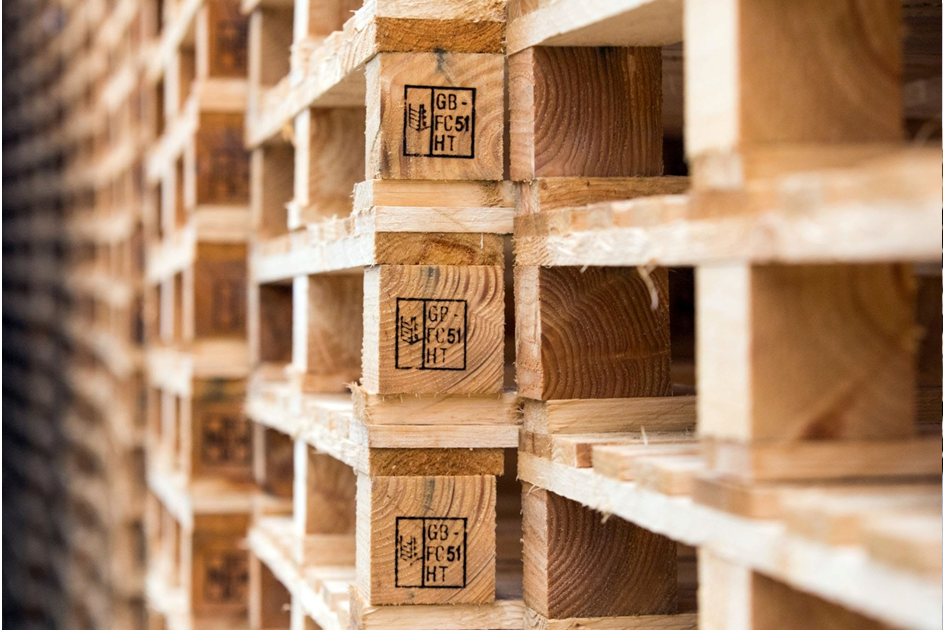
Once wood packaging is treated by an authorized facility, it must be permanently branded or stamped with an approved IPPC Mark. Hand-drawn stamps, adhesive labels, or metal tags are strictly prohibited.
The stamp consists of two main sections divided by a vertical line inside a border:
Left Side:
- IPPC Logo: The official wheat-and-symbol graphic
Right Side:
- Country Code (XX): Two-letter ISO country code where the wood was treated (e.g., US, GB, IN, DE).
- Producer/Facility Code (000): Unique registration number assigned to the certified manufacturer or treatment facility.
- Treatment Code (YY): Abbreviation showing the treatment used—most commonly HT for Heat Treatment.
What Wood Materials Are Covered vs. Exempt?
Covered (Requires Treatment & Stamp)
- Solid pine wood pallets
- Heavy-duty timber crates and boxes
- Wooden skids, collars, and reels
- Wooden dunnage (loose wood used to brace cargo inside containers)
Exempt (No Treatment or Stamp Required)
- Processed Wood Products: Plywood, Oriented Strand Board (OSB), particleboard, hardboard, or medium-density fiberboard (MDF). (These materials undergo high heat, pressure, and glue during manufacturing, eliminating biological risks).
- Thin Wood: Raw wood with a thickness of 6 mm (0.24 in) or less.
- Alternative Materials: Plastic, corrugated paperboard, metal, or aluminum pallets.
- Processed Items: Wine barrels and wooden gift boxes treated during manufacturing.
4 Best Practices to Guarantee Export Compliance
- Source Only from Certified Suppliers: Always verify that your pallet and crate manufacturer is licensed by an accredited inspection agency (such as ALSC in the U.S. or equivalent national plant protection bodies).
- Ensure Stamp Visibility on Two Opposite Sides: Apply the ISPM 15 stamp on at least two visible, opposite sides of every pallet, box, or crate so customs officials can inspect them without unpacking container loads.
- Handle Repairs and Modifications Correctly: If a treated pallet breaks and has components replaced, it loses its compliant status unless repaired with pre-treated wood and re-stamped. Replacing more than one-third of the wood requires the entire pallet to be re-treated and re-stamped.
- Distinguish Between Kiln-Dried (KD) and Heat-Treated (HT): Kiln Drying (KD) reduces moisture content to prevent warping or mold, but it does not automatically mean the wood reached the mandatory 56°C core temperature for 30 minutes. Always verify that your invoice and stamps specifically state HT.